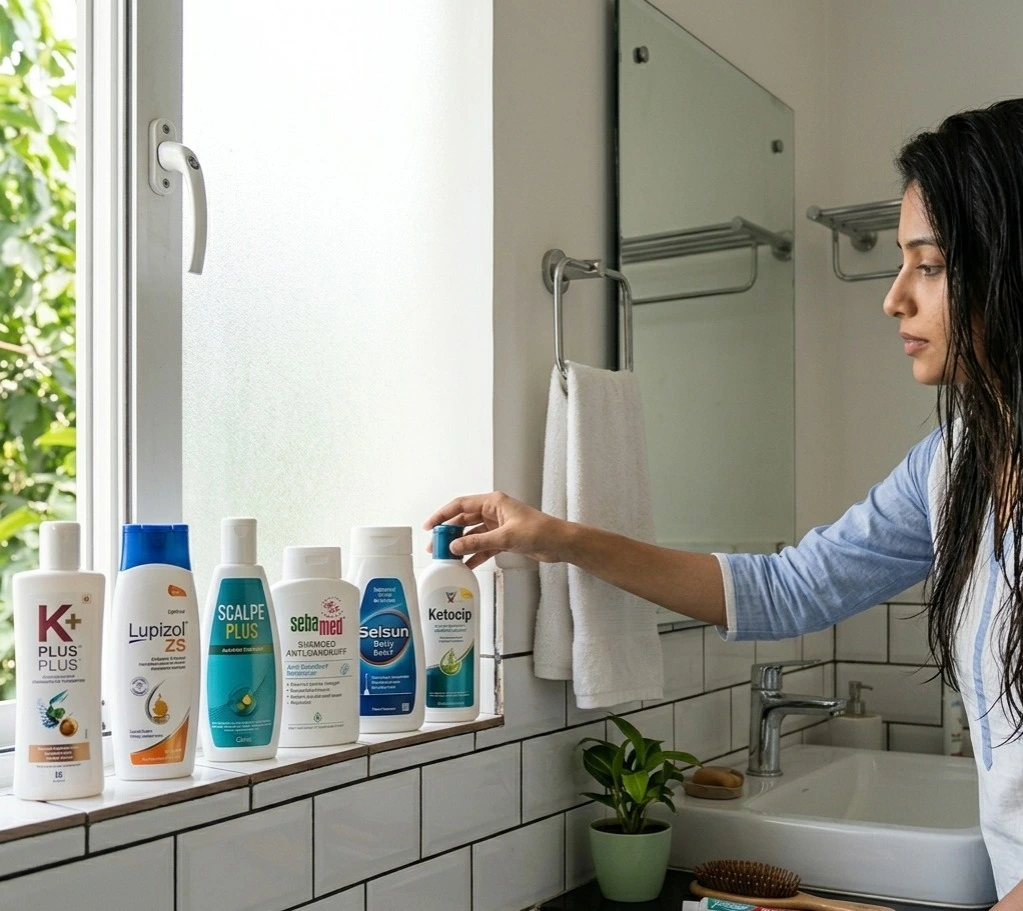
“Why does dandruff keep coming back even after using anti-dandruff shampoo?”
If you’ve asked yourself this while brushing white flakes off your shoulders, you’re not alone.
- Dandruff shampoo is one of the most searched hair-care categories in India every year, and for good reason it’s one of the most common scalp concerns, affecting both men and women, and it can cause itching, irritation, visible flaking, and in some cases, increased hair fall.
- Picking the best anti dandruff shampoo for your specific scalp isn’t about grabbing the most-advertised bottle; it’s about matching the active ingredient to what’s actually causing your flakes.
This 2026 guide compares six dermatologist-recommended dandruff shampoos available through CutisKart, breaks down which ingredients treat which cause, and tells you when an over-the-counter shampoo isn’t enough and a dermatologist visit is the better next step.
Your Online Pharmacy for Skin, Hair & Nail Care – Fast Delivery Across Bangalore
Best Anti-Dandruff Shampoos in India (2026 Comparison)
| Shampoo | Key Ingredient | Best For (Scalp Type) | Severity | Price (Starter Pack) |
| K Plus Plus Shampoo | Ketoconazole + Zinc Pyrithione | Oily scalp, persistent dandruff | Moderate to Severe | ₹417.65 (180ml) |
| Lupizol ZS Shampoo | Zinc Pyrithione + Conditioning Agents | Normal to oily scalp, everyday control | Mild to Moderate | ₹417.07 (100ml) |
| Scalpe Plus Shampoo | Ketoconazole + Zinc Pyrithione | Irritated, flaking scalp | Severe | ₹309.60 (75ml) |
| Sebamed Anti-Dandruff Shampoo | Piroctone Olamine | Sensitive, irritation-prone scalp | Mild to Moderate | ₹544.55 (200ml) |
| Selsun Daily 2-in-1 Shampoo | Selenium Sulfide | Oily scalp with heavy flaking | Moderate to Severe | ₹391.51 (120ml) |
| Ketocip Shampoo | Ketoconazole 1% | Fungal-driven dandruff | Severe | ~₹260-320 (100ml)* |
How We Chose These Shampoos
- Rather than ranking by popularity or star ratings alone, this list is built around one question dermatologists actually ask first:
- what’s causing the dandruff.
- Each shampoo below was shortlisted because its active ingredient has established evidence for a specific dandruff driver fungal overgrowth, excess oil, scalp sensitivity, or product buildup and because it’s sold through a pharmacy-verified channel rather than an unverified third-party listing.
We didn’t include shampoos with vague “anti-dandruff” marketing but no disclosed active ingredient, since that’s the detail that actually determines whether a shampoo works for your scalp or just masks flakes for a day.
How to Use Selsun Shampoo for Dandruff Properly
Why Does Dandruff Happen?
Many people assume dandruff means they aren’t washing their hair often enough. In reality, several distinct factors can cause it, and they don’t all respond to the same shampoo:
- Excess oil production on the scalp
- Growth of dandruff-causing fungus (Malassezia)
- Product buildup from styling or hard water
- Pollution and sweat, especially in humid Indian cities
- Dry, dehydrated scalp
- Stress and lifestyle factors
- Seborrheic dermatitis, a more chronic inflammatory condition
If the underlying cause isn’t addressed, flakes tend to return even after a few good washes which is usually why people cycle through three or four “best” shampoos before finding one that actually works.
Match the Ingredient to the Cause
Instead of choosing a shampoo by advertisement, dermatologists start with the active ingredient and what it’s actually built to treat.
| Ingredient | How It Helps |
| Ketoconazole | Antifungal targets Malassezia, the fungus behind most fungal dandruff |
| Zinc Pyrithione | Reduces flaking and itching through antifungal and antibacterial action |
| Selenium Sulfide | Controls severe dandruff and slows excess skin cell turnover |
| Salicylic Acid | Exfoliates and removes dead skin buildup |
| Piroctone Olamine | Gentler antifungal, helps prevent recurrence without over-drying |
| Tea Tree Oil | Supports scalp hygiene, mild antimicrobial support |
The Shampoos, One by One
1. K Plus Plus Shampoo
K Plus Plus Shampoo is often recommended for dandruff that doesn’t respond to regular over-the-counter shampoos.
Best for: Moderate, oily-scalp dandruff with frequent itching.
Pros: Combines ketoconazole and zinc pyrithione for a dual-action approach; suitable for recurring scalp issues. Cons: Likely more than what’s needed for very mild, occasional flaking.
2. Lupizol ZS Shampoo
Lupizol ZS Shampoo is built for everyday dandruff control rather than treating a severe flare.
Best for: Routine maintenance on a normal-to-oily scalp that needs regular upkeep without harsh stripping.
3. Scalpe Plus Shampoo
Scalpe Plus remains one of the most widely recommended options for stubborn dandruff in India.
Best for: Severe, persistent flaking with visible scalp irritation.
4. Sebamed Anti-Dandruff Shampoo
People with reactive or sensitive skin often can’t tolerate harsher anti-dandruff formulas. Sebamed is a gentler, pH-balanced alternative.
Best for: Sensitive or irritation-prone scalps that need frequent, gentle use rather than an aggressive active.
Sebamed soap benefits – check this Guide
5. Selsun Daily 2-in-1 Shampoo
Selsun is particularly useful when dandruff shows up alongside an oily scalp.
Best for: Oily scalps where excess sebum is worsening flaking and scaling.
6. Ketocip Shampoo
Ketocip uses ketoconazole, a well-established antifungal, to target the microorganisms most often behind fungal dandruff.
Best for: Moderate to severe dandruff with a fungal component.
Which Anti-Dandruff Shampoo Is Right for You?
| If You Have | Recommended Option |
| Mild dandruff | Sebamed Anti-Dandruff Shampoo |
| Oily scalp | Selsun Daily 2-in-1 Shampoo |
| Severe flaking | Scalpe Plus Shampoo |
| Persistent dandruff | K Plus Plus Shampoo |
| Sensitive scalp | Sebamed Anti-Dandruff Shampoo |
| Recurring, fungal-driven dandruff | Ketocip Shampoo |
Best Dandruff Shampoo for Men: What to Prioritize
Men’s scalps tend to run oilier on average, and shorter hair often means less contact time before rinsing both change what “best” actually looks like.
- Prioritize Ketoconazole 2% or Selenium Sulfide. Both cut through excess oil and directly target the yeast overgrowth usually behind male-pattern dandruff K Plus Plus Shampoo and Selsun Daily 2-in-1 from the table above are reasonable starting points.
- Leave it on for the full contact time 3-5 minutes, not a quick rinse. Shorter hair often means washing and rinsing too fast for the active ingredient to actually work on the scalp.
- Watch for beard and eyebrow flaking too. If dandruff is showing up there as well, it points toward seborrheic dermatitis rather than plain dandruff, and a broader treatment approach possibly with a dermatologist helps.
- Avoid daily use of the strongest formulas. Ketoconazole 2% is typically used 2-3 times a week, with a gentler shampoo in between, rather than every single wash.
Buy this Trisilk Shampoo – A Premium Hair Care Solution for men
Best Dandruff Shampoo for Women: What to Prioritize
Women more often deal with dry-scalp-driven dandruff, color-treated hair, and longer wash cycles, which shifts the priorities.
- Start gentler Piroctone Olamine or Zinc Pyrithione. These are usually kinder starting points, especially for color-treated or chemically processed hair, where harsher Ketoconazole formulas can be more drying. Sebamed Anti-Dandruff Shampoo or Lupizol ZS from the comparison table fit this profile.
- Pair anti-dandruff shampoo with a separate conditioner, applied only to the lengths. Active ingredients work at the scalp; conditioner at the roots can dilute their effect.
- If flaking is dry rather than oily, a salicylic acid-based formula used once or twice a week alongside your regular gentle shampoo often works better than replacing your everyday shampoo entirely.
- Space out stronger actives. Using Ketoconazole 2% only 2 times a week, with a hydrating shampoo on other wash days, helps prevent the dryness and breakage that comes from overuse particularly relevant for chemically treated hair.
Is It Worth Switching Anti-Dandruff Shampoos Every Few Months?
Not usually, and this is one of the more common misconceptions in dandruff care.
If a formula with the right active ingredient for your scalp type is working, stick with it. Switching frequently just resets the 4-6 week window every formula needs to show results, which is often why people feel like “nothing works” when the real issue is never giving one option a fair trial.
- The better approach is rotating between a medicated shampoo (2-3 times a week) and a gentle daily shampoo, rather than hopping between different medicated brands hoping one performs better than the last.
- The one genuine exception is when your scalp’s actual needs change moving from a humid to a dry climate, a period of high stress that triggers seborrheic dermatitis, or coloring your hair for the first time.
- In those cases, reassessing the active ingredient makes sense.
- Switching brands that use the same active ingredient just because a new bottle looks appealing, on the other hand, usually doesn’t move the needle either way.
Check this How Long Does Selsun Shampoo Take to Work? Week-by-Week Results Explained
How to Use an Anti-Dandruff Shampoo Correctly
Even the right shampoo underperforms if it’s used the wrong way.
- Wet hair thoroughly before applying.
- Apply shampoo directly to the scalp, not just the lengths.
- Massage gently with fingertips, not nails.
- Leave it on for 3-5 minutes most active ingredients need contact time to work.
- Rinse thoroughly; leftover residue can itself irritate the scalp.
- Follow the frequency printed on the label rather than using it daily by default.
Consistency over several weeks matters more than the amount of product used in a single wash.
Anti-Dandruff Treatments Beyond Shampoo
Shampoo does most of the work, but it isn’t the only tool worth knowing about a few supporting products can meaningfully speed up or stabilize results when used alongside the right shampoo, not instead of it.
| Treatment Type | What It Does | Worth Adding If |
| Anti-dandruff conditioner | Keeps scalp and lengths hydrated without undoing the shampoo’s active ingredient | You have dry or color-treated hair that feels stripped after medicated shampoo |
| Scalp-targeted treatment (serum/tonic) | Applied directly to the scalp between washes, targets buildup more precisely than shampoo alone | Flaking persists in specific patches rather than evenly across the scalp |
| Medicated shampoo at higher strength | Dermatologist-recommended for cases that don’t respond to standard OTC formulas | Over-the-counter options have been used consistently for 6+ weeks with no improvement |
| Natural/herbal additions (tea tree, neem) | Mild antimicrobial support, generally used alongside not in place of an active-ingredient shampoo | You want additional scalp comfort and tolerate your current shampoo well |
None of these replace a shampoo with a proven active ingredient like ketoconazole or zinc pyrithione they’re supporting tools for specific situations, not an alternative treatment path. If you’re reaching for a conditioner or oil instead of switching to the right shampoo for your scalp type, you’re treating the symptom while the cause stays unaddressed.
Building Anti-Dandruff Treatment Into Your Actual Routine
A good shampoo underperforms if it’s not actually built into a consistent routine. A few habits make the difference between “I tried it and it didn’t work” and genuine improvement:
- Use it on a fixed schedule, not just when flakes are visible. Most medicated shampoos are designed for 2-3 uses a week waiting until dandruff is obviously bad before using it undercuts the consistency these formulas need.
- Keep the scalp hydrated on non-treatment days. A gentle, non-medicated shampoo or conditioner on the days you’re not using the active formula prevents the dryness that can itself trigger more flaking.
- Avoid stacking harsh products on top of a medicated shampoo. Strong clarifying shampoos, frequent heat styling, or additional scalp exfoliants used in the same week can irritate a scalp that’s already adjusting to an active ingredient.
- Give the full 4-6 week window before judging results, exactly as covered earlier in this guide this is worth repeating here because routine inconsistency is one of the most common reasons that window never gets a fair test.
Best Anti-Dandruff Shampoos for Rainy Season – treatment for itchy, flaky scalp during monsoons in india
Preventing Dandruff Long-Term
Treatment controls dandruff once it’s present; a few consistent habits reduce how often it comes back in the first place.
- Keep a regular wash schedule rather than stretching washes out, since both under-washing (oil and buildup) and over-washing with harsh shampoo (dryness) can trigger flaking.
- Avoid harsh, stripping hair products outside of your medicated shampoo frequent clarifying shampoos or heavy styling products can disrupt a scalp that’s otherwise stable.
- Manage stress where possible. Stress doesn’t cause dandruff directly, but it can worsen seborrheic dermatitis and related scalp conditions, making flare-ups more frequent.
- Reassess your routine with the seasons, since scalp oiliness and dryness often shift with humidity and weather what worked for you in winter may need a lighter touch in summer.
When Should You See a Dermatologist?
Consider professional advice if:
- Dandruff persists for more than a month despite consistent use
- The scalp becomes red or visibly inflamed
- Itching becomes severe or disrupts sleep
- Hair fall increases noticeably alongside the flaking
- An over-the-counter shampoo that used to work suddenly stops helping
Persistent dandruff that doesn’t respond to standard antifungal or zinc-based shampoos can sometimes be linked to seborrheic dermatitis or scalp psoriasis, both of which need a dermatologist’s diagnosis rather than another shampoo swap.
Check dermatologist-recommended anti-dandruff shampoos on CutisKart
Final Verdict
Finding the best anti dandruff shampoo in India isn’t about the most popular bottle on the shelf, it’s about matching the active ingredient to your scalp’s actual cause.
- For persistent dandruff, K Plus Plus and Scalpe Plus are commonly chosen.
- For sensitive scalps, Sebamed is the gentler route.
- Oily, flake-prone scalps tend to respond better to Selsun Daily 2-in-1, while Ketocip is often reached for when the dandruff has a clear fungal driver.
Whichever you choose, give it a full 4-6 week trial before deciding it isn’t working, and use it consistently rather than only when flakes are visible.
Ready to treat your specific scalp concern rather than guessing?
Check best anti dandruff shampoo
Frequently Asked Questions
-
Which is the best anti-dandruff shampoo in India?
The best anti dandruff shampoo depends on your scalp condition rather than one universal winner. Dermatologist-recommended options include K Plus Plus Shampoo for persistent dandruff, Scalpe Plus for severe flaking, Sebamed for sensitive scalps, and Selsun Daily 2-in-1 for oily scalps.
-
What is the best dandruff shampoo for daily use?
Gentler, pH-balanced formulas like Sebamed Anti-Dandruff Shampoo are generally better suited to daily or frequent use, while stronger ketoconazole- or selenium sulfide-based shampoos are usually meant for 2-3 uses a week rather than every day.
-
What ingredient is best for dandruff?
Ketoconazole, zinc pyrithione, selenium sulfide, and piroctone olamine are the most commonly recommended active ingredients, each suited to a different cause fungal, oily, severe, or recurrence-prone dandruff respectively.
-
Can anti-dandruff shampoo reduce hair fall?
Anti-dandruff shampoos aren’t hair fall treatments on their own, but reducing scalp inflammation and itching can improve overall scalp health, which indirectly supports healthier hair growth conditions.
-
How often should I use anti-dandruff shampoo?
This depends on the specific product and how severe your dandruff is always follow the frequency printed on the label rather than assuming daily use is safe for every formula, since some stronger actives can dry out the scalp if overused.
-
Can dandruff come back after treatment?
Yes. Dandruff often returns if the underlying cause oiliness, fungal overgrowth, or a chronic condition like seborrheic dermatitis isn’t actually managed, not just masked. Regular scalp care and staying with the right shampoo consistently reduces how often it comes back.