“I treated the yeast infection, the itching went away, and then two months later it’s back. Is my underwear actually making this worse?”
It’s one of the most common questions we hear, and the honest answer is often yes. Antifungal innerwear for women has moved from a niche product into something dermatologists and gynecologists are increasingly recommending alongside standard treatment, and once you understand the biology of why yeast infections recur, it makes complete sense why.
About 75% of women will experience at least one episode of vulvovaginal candidiasis in their lifetime, and a significant share go on to deal with it recurring multiple times a year. Treatment creams and tablets clear the active infection, but they don’t change the daily conditions of heat, moisture, friction that let Candida overgrow in the first place. That’s the specific gap antifungal innerwear is designed to close.
What Causes Yeast Infections in the First Place
A vaginal yeast infection, medically called vulvovaginal candidiasis, happens when Candida albicans, a fungus that’s normally present in small amounts in the vagina overgrows and disrupts the natural microbial balance. This isn’t caused by poor hygiene alone; it’s usually triggered by a specific shift in your body’s environment.
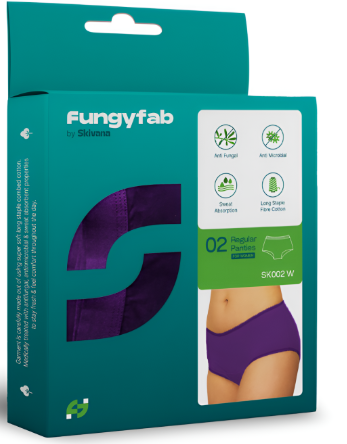
Fungyfab Womens Regular Panties Pack of 2 – Buy this combo product
Common Risk Factors
| Risk Factor | Why It Triggers Overgrowth |
| Antibiotic use | Kills protective Lactobacillus bacteria that normally keep Candida in check |
| Pregnancy | Raises estrogen levels, which favors yeast growth |
| Hormonal contraceptives | Elevated estrogen from birth control pills increases risk |
| Poorly controlled diabetes | High blood sugar directly feeds yeast overgrowth |
| Weakened immune system | Conditions or medications that suppress immunity reduce natural resistance |
| Tight, non-breathable clothing | Traps heat and moisture, creating an ideal growth environment |
| Damp or sweat-soaked innerwear | Extends the time skin stays in a warm, moist state |
If you notice your infections cluster around antibiotic courses, your period, or hot and humid weather, that pattern usually points to one or more of these triggers rather than anything you’re doing “wrong.”
Why Regular Underwear Often Works Against You
- Most women don’t realize how much daily underwear choice affects vaginal health until they start tracking when flare-ups happen.
- Synthetic fabrics nylon, tight lace blends, seamless synthetic briefs create a warm, humid microenvironment that actively promotes dysbiosis, making it easier for Candida and certain anaerobic bacteria to colonize.
- Even cotton, while more breathable than synthetics, only reduces the problem it doesn’t prevent it, since it still absorbs and holds moisture against the skin through the day.
This is exactly why doctors have long recommended “loose cotton underwear that doesn’t trap moisture” as a baseline prevention step. Antifungal innerwear takes that same principle further, using fabric treatments that don’t just avoid making things worse, but actively work against fungal and bacterial growth.
Best Anti-Fungal Creams & Lotions for Monsoon Skin Infections
What Makes Innerwear Genuinely Antifungal
Not every underwear brand claiming “breathable” or “hygienic” is doing the same thing. Real antifungal innerwear typically relies on a specific textile treatment plus supporting design features.
| Feature | What It Does | Why It Matters |
| Silver-ion or nanosilver fabric treatment | Disrupts fungal cell respiration and induces oxidative stress on contact | Actively resists Candida and bacterial growth rather than just absorbing moisture |
| Moisture-wicking inner layer | Draws moisture away from skin toward the outer fabric | Keeps the vulvovaginal area drier through the day |
| Breathable, ventilated weave | Increases airflow | Lowers local temperature and humidity, both key drivers of overgrowth |
| Soft, seamless construction | Minimizes friction against sensitive skin | Reduces micro-irritation that can make skin more vulnerable to infection |
| Dermatologically and gynecologically tested fabric | Free from harsh dyes and synthetic irritants | Safer for skin that’s already inflamed or recovering from infection |
Silver-infused textiles have measurable antifungal activity against Candida albicans and dermatophyte species by disrupting fungal cell function on contact, not merely by improving airflow.
This is the core science behind why antimicrobial innerwear is positioned as more than a comfort product.
What the Clinical Research Actually Shows
This is the part worth paying attention to, because it’s not just theoretical.
- A 2026 clinical study evaluated antimicrobial underwear as an adjunct to standard treatment in 60 reproductive-age women with acute vaginitis.
- Over a 7-day course of intravaginal treatment, the group also using antimicrobial underwear showed measurable clinical and microbiological improvement compared to standard treatment alone, supporting the idea that underwear textile composition is a real, modifiable factor in vaginal symptom management not just marketing language.
That study specifically noted that underwear type and textile composition are potential determinants of moisture retention, friction, local temperature, and microbial colonization in the vulvovaginal region.
In plain terms: what you wear against your skin every day is a genuine clinical variable, not a minor lifestyle detail.
Check for men also – Antifungal Underwear for Men: How It Helps Prevent Jock Itch & Fungal Recurrence
Antifungal Innerwear vs Regular Underwear
| Factor | Regular Cotton/Synthetic Underwear | Antifungal Innerwear |
| Moisture handling | Absorbs but holds moisture against skin | Actively wicks moisture away from skin |
| Fungal/bacterial resistance | None fabric itself offers no resistance | Fabric actively inhibits growth on contact |
| Breathability | Moderate (cotton) to poor (tight synthetics) | Engineered specifically for airflow |
| Friction and irritation | Higher, especially with tight or seamed styles | Reduced with soft, seamless design |
| Support for recurrent infection management | None same environment recreated daily | Acts as a daily adjunct alongside medical treatment |
Fungyfab Womens Regular Panties – check this product
Building a Daily Routine Around Prevention
Antifungal innerwear works best as part of a broader daily habit, not a standalone fix. Leading clinical guidance on managing recurrent candidiasis specifically flags dry, damaged vulval skin from overwashing and harsh feminine products as a major modifiable risk factor.
- Wash the vulva once a day at most, using your hands rather than sponges or cloths, and avoid soaps, bubble baths, or scented feminine washes entirely.
- Choose antifungal or plain breathable cotton innerwear over synthetic, tight-fitting styles, and avoid wearing underwear overnight if it helps your skin stay drier.
- Change out of damp gym wear, swimwear, or sweat-soaked innerwear as soon as possible rather than staying in it for hours.
- Avoid daily panty liners, which trap moisture against the skin even when they feel convenient.
- Wipe front to back after using the toilet, and skip douching completely it disrupts the vagina’s natural bacterial balance and increases infection risk rather than preventing it.
- If you’re diabetic, keep blood sugar well controlled, since elevated glucose directly feeds yeast overgrowth.
Best Antifungal Underwear in India (2026): Stop Recurring Fungal Infections
When Innerwear Isn’t Enough on Its Own
Antifungal innerwear supports prevention and can meaningfully reduce recurrence risk, but it doesn’t replace medical treatment for an active infection. Standard treatment includes antifungal creams, suppositories, or oral medications such as fluconazole, prescribed based on symptom severity and frequency.
See a doctor rather than self-treating repeatedly if:
- Symptoms recur four or more times in a year, which meets the clinical definition of recurrent vulvovaginal candidiasis and needs proper evaluation.
- You notice unusual discharge, odor, or bleeding alongside itching, since these can indicate a different condition like bacterial vaginosis rather than a yeast infection.
- Over-the-counter antifungal treatment doesn’t resolve symptoms within a week.
- You have diabetes or a weakened immune system and infections are becoming more frequent, since an underlying condition may need separate management.
The pattern here is consistent across the research: fungal recurrence isn’t about bad luck or poor hygiene, it’s about an environment that keeps resetting itself every day through heat, moisture, and friction. Antifungal innerwear won’t replace a prescribed treatment when infection is active, but as a daily habit, it directly targets the conditions that let yeast infections keep coming back in the first place.
Frequently Asked Questions
-
Can antifungal innerwear alone cure a yeast infection?
No. It supports prevention and can reduce recurrence when used alongside proper hygiene habits, but an active yeast infection typically still needs an antifungal cream, suppository, or oral medication.
-
Why do yeast infections keep coming back even after treatment works?
Recurrence usually happens because the underlying trigger hormonal changes, antibiotic use, tight clothing, or trapped moisture hasn’t been addressed, even though the active infection was cleared.
-
Is silver-ion treated innerwear actually backed by evidence, or is it just a marketing claim?
It’s backed by real evidence. Silver-infused textiles disrupt fungal cell function in lab studies against Candida and related species, and a 2026 clinical study on women with acute vaginitis found measurable improvement when antimicrobial underwear was used alongside standard treatment.
-
Is cotton underwear enough, or do I need specifically antifungal innerwear?
Cotton is better than tight synthetics because it’s more breathable, but it doesn’t actively resist fungal growth the way antimicrobial-treated fabric does. Cotton reduces risk; antifungal innerwear actively works against it.
-
How often should yeast infections happen before I see a doctor instead of self-treating?
If infections occur four or more times a year, that’s considered recurrent vulvovaginal candidiasis and needs proper medical evaluation rather than repeated over-the-counter treatment
Leave a Reply