“Why am I still getting acne even after trying face washes, home remedies, and trending skincare products?”
If this sounds familiar, you’re not alone. Acne is one of the most common skin concerns in India, affecting teenagers, working professionals, and even adults in their 30s and 40s. The good news is that today it’s easier than ever to buy skin care Products Online in India through trusted dermatology pharmacies that offer dermatologist-recommended solutions for different skin types and acne conditions.
But here’s where most people get confused:
- Should you buy over-the-counter (OTC) acne products?
- Do you need prescription acne medicines?
- Which ingredients actually work?
- Is buying acne medicines online safe?
This guide explains the difference between OTC and prescription acne treatments, how dermat pharmacies help, and how to choose products safely for your skin.
Understanding acne: why does it happen?
Acne develops when oil, dead skin cells, and bacteria clog the pores. Hormonal changes, stress, diet, sweating, pollution, and improper skincare routines can all contribute to breakouts. Explore acne-prone skincare support for maintaining healthier-looking skin.
Common types of acne include:
| Type of Acne | Appearance | Severity |
| Whiteheads | Closed clogged pores | Mild |
| Blackheads | Open clogged pores | Mild |
| Papules | Small red bumps | Moderate |
| Pustules | Pimples with pus | Moderate |
| Nodules | Painful deep bumps | Severe |
| Cystic acne | Large inflamed cysts | Severe |
Not every acne condition needs strong prescription medicines. Some mild acne cases respond well to OTC skincare products, while moderate or severe acne may require dermatologist-prescribed treatments.
What are OTC acne medicines?
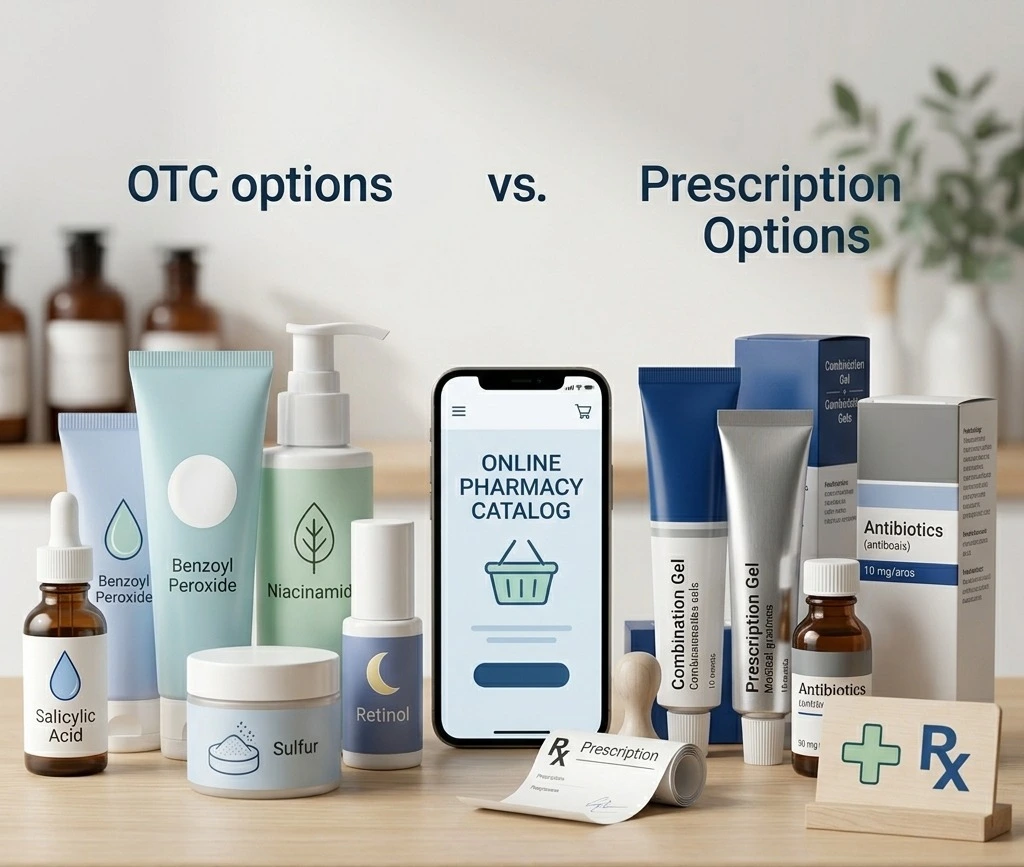
OTC (Over-The-Counter) acne products are medicines or skincare products available without a doctor’s prescription. These are usually recommended for:
- Mild acne
- Occasional breakouts
- Oily skin
- Blackheads and whiteheads
- Acne prevention
OTC products are popular because they are easily accessible and suitable for beginners starting an acne-care routine.
Common ingredients found in OTC acne products
1. Salicylic Acid
Helps deeply cleanse pores, control excess oil, and reduce blackheads and acne breakouts effectively.
Best for:
- Blackheads
- Whiteheads
- Oily skin
2. Benzoyl Peroxide
Targets acne-causing bacteria, reduces inflammation, and helps active pimples heal faster with regular use.
Best for:
- Red pimples
- Mild inflammatory acne
3. Niacinamide
Supports oil control, calms redness, strengthens the skin barrier, and helps fade post-acne marks gradually.
Best for:
- Sensitive acne-prone skin
- Acne marks
4. Sulfur
Absorbs excess oil, clears clogged pores, and helps dry out active acne without making skin overly greasy.
Best for:
- Spot treatment
5. Retinol (mild OTC forms)
Promotes skin renewal, prevents clogged pores, and improves acne texture and marks over time.
Best for:
- Acne scars
- Mild breakouts
Benefits of OTC acne treatments
Easy availability
You can order products online from trusted dermat pharmacies without visiting a clinic for mild acne concerns.
Affordable for regular skincare
OTC acne products are generally budget-friendly for long-term maintenance.
Good for beginners
If you’re new to acne treatment, OTC options help you start slowly without aggressive medication.
Useful for maintenance after prescription treatment
Many dermatologists recommend continuing gentle OTC skincare after prescription acne improves.
What are prescription acne medicines?
Prescription acne medicines are stronger treatments recommended by dermatologists for moderate to severe acne conditions.
These medicines may include:
- Prescription retinoids
- Oral antibiotics
- Hormonal acne medicines
- Stronger topical creams
- Isotretinoin
- Combination acne gels
These are used when OTC products alone are not enough. You can also support irritated or acne-treated skin with a soothing cream for acne-treated sensitive skin .
Signs you may need prescription acne treatment
You should consult a dermatologist if you experience:
- Painful cystic acne
- Frequent breakouts
- Acne scars
- Acne lasting for months
- Acne spreading to chest/back
- Severe redness or inflammation
- Emotional stress due to acne
Ignoring severe acne may lead to permanent scarring and pigmentation.
OTC vs prescription acne medicines: key differences
| Feature | OTC Acne Products | Prescription Acne Medicines |
| Availability | Without prescription | Requires dermatologist guidance |
| Strength | Mild to moderate | Stronger formulations |
| Best for | Mild acne | Moderate to severe acne |
| Side effects | Usually mild | Higher risk if misused |
| Results | Gradual improvement | Faster clinical results |
| Cost | Generally affordable | Can be expensive |
| Monitoring needed | Minimal | Often necessary |
The best approach depends on your acne severity, skin type, and medical history.
Can you combine OTC and prescription treatments?
Yes, but only carefully. Many dermatologists combine:
- Gentle cleansers
- Oil-control products
- Barrier-repair moisturizers
- Prescription acne medicines
This helps reduce dryness and irritation while improving acne recovery.
For example:
- A dermatologist may prescribe a retinoid gel at night.
- During the day, you may use a niacinamide-based moisturizer and sunscreen.
The goal is balanced skin treatment, not overusing harsh ingredients.
Risks of self-medicating acne online
Buying acne medicines online is convenient, but blindly using strong treatments without guidance can damage your skin.
Common mistakes people make
- Using multiple active ingredients together
- Overusing exfoliants
- Trying prescription medicines without diagnosis
- Ignoring sunscreen
- Following viral skincare trends blindly
This can cause:
- Skin barrier damage
- Peeling
- Redness
- Hyperpigmentation
- Increased acne flare-ups
Always choose products from trusted dermatology-focused pharmacies.
How dermat pharmacies help acne patients
Dermat pharmacies focus on scientifically backed skincare and dermatologist-recommended products, including solutions like dermatologist-recommended skincare lotion for daily skin support.
Benefits include:
Authentic products
You receive genuine skincare and pharmaceutical products.
Better ingredient transparency
Dermatology pharmacies usually provide detailed ingredient information.
Curated skincare categories
Products are organized based on concerns like:
- Acne
- Pigmentation
- Dry skin
- Sensitive skin
- Anti-aging
Access to dermatologist-trusted brands
These products are often clinically tested and suitable for Indian skin conditions.
Building a simple acne skincare routine
Many people overcomplicate skincare. Acne treatment works best with consistency and simplicity.
Morning routine
- Gentle cleanser
- Acne-control serum or gel
- Lightweight moisturizer
- Sunscreen SPF 30+
Night routine
- Cleanser
- Acne treatment product
- Moisturizer
Avoid:
- Scrubbing aggressively
- Using too many acids
- Picking pimples
- Skipping sunscreen
Ingredients to avoid mixing carelessly
Some combinations may irritate sensitive skin.
| Ingredient Combination | Possible Issue |
| Benzoyl peroxide + retinol | Excess dryness |
| Strong acids + retinoids | Skin irritation |
| Multiple exfoliants | Barrier damage |
| Harsh scrubs + active acne | Increased inflammation |
If your skin becomes painful or irritated, reduce active ingredients and seek dermatologist advice.
Lifestyle habits that support acne treatment
Skincare alone is not enough. Healthy habits also matter.
Helpful habits
- Wash pillowcases regularly
- Stay hydrated
- Sleep properly
- Avoid touching your face often
- Remove makeup before sleeping
- Manage stress levels
Food and acne
Research suggests some people may experience acne flare-ups from:
- Excess sugar
- High glycemic foods
- Excess dairy
However, triggers differ from person to person.
Recommended skincare products from Cutiskart
If you’re planning to Buy skin care Products Online in India, choosing dermatologist-focused skincare products can help you build a safer acne-care routine.
Here are some useful skincare options available at:
1. Minimalist Polyhydroxy Acid (PHA) 03% Face Toner
A gentle exfoliating toner suitable for beginners dealing with clogged pores and oily skin.
2. Acnecross Anti Acne Body Spray
Helpful for people struggling with body acne on the back and shoulders.
3. Bioderma Sensibio Defensive Rich Active Soothing Cream
A soothing moisturizer that helps support sensitive or acne-treated skin barriers.
How to safely buy acne medicines online
Before ordering acne products online, follow these simple checks:
Check ingredient lists
Understand what active ingredients your skin actually needs.
Read usage instructions
Even OTC products require proper application.
Avoid unrealistic claims
No skincare product can permanently cure acne overnight.
Buy from trusted dermatology pharmacies
Choose platforms specializing in dermatologist-recommended skincare.
Patch test first
Especially important for sensitive skin.
When should you see a dermatologist immediately?
Seek professional help if you notice:
- Painful cystic acne
- Sudden severe acne
- Acne with hormonal symptoms
- Persistent acne scars
- Skin burning after products
- Repeated acne flare-ups despite treatment
Prescription medicines can be extremely effective when used correctly under medical supervision.
Why online dermat pharmacies are becoming popular in India
More people now prefer ordering skincare online because:
- Wider product availability
- Access to premium dermat brands
- Better convenience
- Time-saving ordering
- Home delivery
- Easy product comparison
Trusted dermatology platforms also help consumers avoid counterfeit skincare products commonly found in unreliable marketplaces.
Final thoughts
Acne treatment is not about using the strongest medicine possible. It’s about choosing the right treatment based on your skin condition, acne severity, and skin sensitivity.
For mild acne, OTC products may be enough when used consistently with a proper routine. For severe or painful acne, prescription medicines guided by a dermatologist are often the safest and most effective option. The key is patience, consistency, and using scientifically backed skincare instead of chasing quick-fix internet trends.
If you want to Buy skin care Products Online in India, always choose trusted dermatology-focused platforms that offer authentic, dermatologist-recommended products suitable for Indian skin types.
Explore dermatologist-recommended skincare solutions here:
Cutiskart Skin Care Category
Leave a Reply