I finished the cream, the itching stopped for three weeks, and now it’s back in the exact same spot. What am I doing wrong?
If you’ve asked a dermatologist or pharmacist something close to this, you already know the frustrating part of jock itching isn’t treating it once, it’s keeping it from coming back.
Antifungal underwear for men exists specifically to break that cycle, and understanding why it works requires understanding what’s actually happening in your groin every single day, treatment or no treatment.
This isn’t a marketing angle. Jock itch, medically known as tinea cruris, has a male predominance of roughly 3:1 compared to women, largely because of how the scrotum sits against the thigh and traps heat and moisture in a way anatomy doesn’t allow for elsewhere on the body.
That’s exactly the environment ordinary cotton or synthetic underwear does nothing to fix, and in many cases actively worsens.
What Jock Itch Actually Is and Why Men Get It More
Jock itch is a dermatophyte fungal infection, most commonly caused by Trichophyton rubrum or Epidermophyton floccosum, that thrives in the groin, inner thighs, and sometimes the buttocks. It shows up as an itchy, often painful rash with sharply defined, scaly edges, and it tends to flare more in summer and humid conditions.
Here’s the direct answer on why men specifically deal with this more: the primary risk factors are a moist environment, warm weather, wet or restrictive clothing, and friction between skin folds and male anatomy creates more of that friction and heat retention by default. Add sweating from work, gym sessions, or Indian summer heat, and you have a near-perfect breeding ground.
Fungyfab Men Pro Buy 2 Get 1 Free – check this combo
Who’s Most at Risk
| Risk Factor | Why It Matters |
| Prior or existing athlete’s foot (tinea pedis) | One of the strongest predictors of jock itch; fungus spreads via towels, socks, or pulling up pants |
| Obesity | Tinea cruris appeared in 2.9% of obese patients vs 0% in non-obese controls in one study, due to skin-fold friction and moisture |
| Excessive sweating (hyperhidrosis) | Keeps the groin damp for extended periods, especially during exercise or manual labor |
| Diabetes | Weakens the skin’s natural defenses against fungal colonization |
| Tight or non-breathable underwear | Reduces ventilation and traps heat against skin |
| Previous tinea cruris episode | A known predisposing factor for recurrence, not just first infection |
If two or more of these apply to you, recurrence risk is meaningfully higher, and underwear choice becomes a genuinely important daily variable, not an afterthought.
Why Regular Underwear Keeps Bringing the Infection Back
Here’s the part most men aren’t told at the pharmacy counter: an antifungal cream can clear the visible infection completely, but if the underwear you wear every day recreates warmth, friction, and trapped moisture, you’re just resetting the same conditions the fungus needs to return.
Cotton absorbs sweat but holds it against the skin rather than moving it away. Synthetic fabrics like untreated nylon or polyester trap heat with minimal airflow, especially in tight-fitting styles. Neither actively stops fungal growth they just soak it up or seal it in. That’s the gap antifungal, antimicrobial underwear is built to close.
What Actually Makes Underwear “Antifungal”
Not every pair labeled “breathable” or “moisture-wicking” is doing anything meaningfully different for fungal prevention. Genuine antifungal underwear typically combines several specific features rather than one marketing claim.
| Feature | What It Does | Why It Matters |
| Antimicrobial fabric treatment (e.g., silver-ion or nanosilver finish) | Actively disrupts fungal respiration and induces oxidative stress in fungal cells | Stops the fabric itself from becoming a breeding ground between washes [web:101] |
| Moisture-wicking weave | Pulls sweat away from skin to the outer layer | Reduces the damp, warm microclimate fungus needs to survive |
| Breathable, ventilated construction | Increases airflow around the groin | Lowers skin temperature and speeds up moisture evaporation |
| Seamless or low-friction stitching | Reduces chafing and micro-abrasions | Prevents skin damage that makes reinfection easier |
| Dermatologically tested fabric | No harsh dyes or synthetic irritants | Safer for skin already inflamed or recovering |
Direct answer: silver- and copper-infused textiles have documented antifungal effects against Trichophyton rubrum, Trichophyton mentagrophytes, and Candida albicans by disrupting fungal cell respiration and enzymatic processes on contact. This isn’t a theoretical claim a silver-ion laundry treatment study recorded roughly a 4-log₁₀ CFU/mL reduction in fungal viability compared to conventional washing.
Check this product – Fungyfab Mens PRO
The Clinical Evidence Behind Antimicrobial Underwear
A real-world clinical study is worth knowing about here, since it goes beyond lab-only testing.
- A prospective study on 90 patients with recurrent tinea cruris had them wear nanosilver-infused innerwear for twelve weeks alongside standard antifungal treatment.
- The result: improved symptom resolution and reduced recurrence rates compared to standard care alone .
- That’s the core evidence for why antifungal underwear is positioned as a genuine adjunct to treatment, not just a comfort upgrade; the same conclusion echoed across dermatology hygiene literature on textile-based antifungal strategies.
Building Antifungal Underwear Into a Daily Routine
Where most men go wrong is treating antimicrobial underwear as something to wear only while actively infected, then switching back to regular underwear once symptoms clear. That approach ignores the fact that the skin environment causing the infection doesn’t disappear on its own.
- Shower and dry the groin area completely before dressing lingering dampness is a bigger daily risk factor than underwear brand alone.
- Choose breathable, low-friction trunks with genuine moisture control over tight synthetic briefs, especially in humid weather or during physically active days.
- Change out of sweat-soaked underwear immediately after workouts or long commutes in heat; even good fabric can’t compensate for hours of trapped sweat.
- Wash antimicrobial underwear in cooler water where the label recommends it hot water can degrade some antimicrobial treatments faster than expected.
- Rotate at least 5-7 pairs so no single pair gets reworn before it’s fully washed and dried, since overwashing any one pair too frequently can wear down the antimicrobial finish faster.
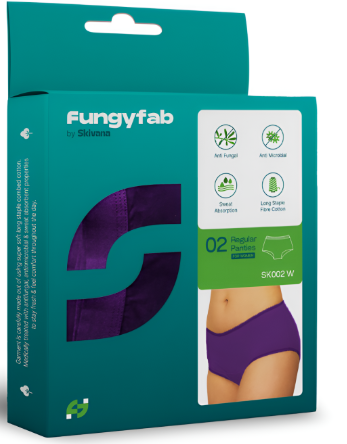
Fungyfab Womens Regular Panties Pack of 2 – check this product
Antifungal Underwear vs Regular Underwear: A Direct Comparison
| Factor | Regular Cotton/Synthetic Underwear | Antifungal/Antimicrobial Underwear |
| Moisture handling | Absorbs but holds sweat against skin | Wicks moisture away to outer layer |
| Fungal growth on fabric | No resistance; can become a reservoir between washes | Actively inhibits fungal and bacterial growth on contact |
| Breathability | Moderate (cotton) to low (tight synthetics) | Engineered for airflow and faster evaporation |
| Friction and chafing risk | Higher, especially in tight-fitting styles | Reduced with seamless, low-friction construction |
| Role in recurrence prevention | None recreates the same risk environment daily | Supports prevention as ongoing daily habit, not just during flare-ups |
When Underwear Alone Isn’t Enough
Better underwear is a genuinely effective prevention and recovery-support habit, but it isn’t a substitute for medical treatment when infection is active. Standard treatment for tinea cruris includes topical antifungals such as clotrimazole, miconazole, ketoconazole, or terbinafine, with oral antifungals like terbinafine or itraconazole reserved for infections that are widespread, inflamed, or resistant to topical treatment.
See a doctor if any of the following apply:
- The rash is spreading beyond the groin fold or toward the anus.
- There’s persistent redness, cracking, or odor despite good hygiene and over-the-counter treatment.
- The same infection has returned three or more times in a year at that point, an underlying factor like undiagnosed diabetes, obesity-related friction, or an untreated athlete’s foot reservoir may need proper evaluation rather than another round of cream.
- Symptoms persist beyond two weeks of consistent over-the-counter treatment.
Jock itch recurrence is frustrating precisely because it feels like it should be solved already the cream worked, so why is it back?
The honest answer: is that treatment addresses the fungus, but daily underwear addresses the environment that let it grow in the first place. If you want a closer look at how to actually choose between reusable and disposable antifungal underwear options available in India, our detailed buying guide on the best antifungal underwear in India breaks down fabric types, replacement timelines, and situation-based recommendations in more depth.
Frequently Asked Questions
-
Does antifungal underwear cure jock itch on its own?
No. It supports prevention and reduces reinfection risk by limiting moisture and friction, but an active, diagnosed fungal infection typically still needs a topical or oral antifungal medication prescribed by a doctor.
-
Why does jock itch keep coming back even after treatment works?
Recurrence usually happens because the skin environment heat, trapped moisture, friction never actually changed, even though the fungus was cleared. A reservoir like an untreated athlete’s foot can also reinfect the groin repeatedly.
-
How is antifungal underwear different from regular breathable underwear?
Genuine antifungal underwear combines an antimicrobial fabric treatment, such as a silver-ion or nanosilver finish, with moisture-wicking and breathable construction. Regular “breathable” underwear may improve airflow but doesn’t actively inhibit fungal growth on the fabric itself
-
How many pairs of antifungal underwear should a man own?
For daily rotation without overwashing any single pair, which can degrade the antimicrobial finish faster, 5–7 pairs is a realistic number for most men managing an active or recently treated infection.
-
Is silver-ion treated underwear backed by real evidence, or is it just marketing?
It’s backed by both lab and clinical evidence. Silver-infused textiles disrupt fungal respiration in vitro against Trichophyton rubrum and related species, and a 12-week clinical study on 90 patients with recurrent tinea cruris showed improved symptom resolution and reduced recurrence when nanosilver-infused underwear was used alongside standard treatment.
Leave a Reply